Music And Measure Theory
A connection between a classical puzzle about rational numbers and what makes music harmonious.
==========
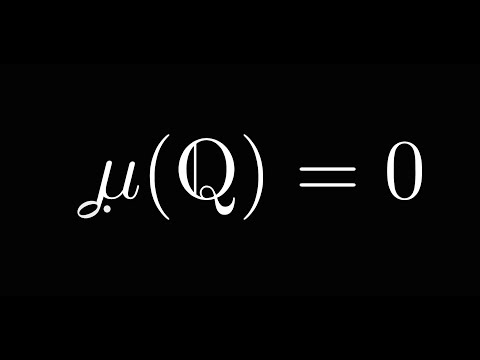
I have two seemingly unrelated challenges for you. The first relates to music, and the second gives a foundational result in measure theory, which is the formal underpinning for how mathematicians define integration and probability. The second challenge, which I’ll get to about halfway through the video, has to do with covering numbers with open sets, and is very counter-intuitive. Or at least, when I first saw it I was confused for a while. Foremost, I’d like to explain what’s going on, but I also plan to share a surprising connection it has with music. Here’s the first challenge. I’m going to play a musical note with a given frequency, let’s say 220 hertz, then I’m going to choose some number between 1 and 2, which we’ll call r, and play a second musical note whose frequency is r times the frequency of the first note, 220. For some val...
==========
I have two seemingly unrelated challenges for you. The first relates to music, and the second gives a foundational result in measure theory, which is the formal underpinning for how mathematicians define integration and probability. The second challenge, which I’ll get to about halfway through the video, has to do with covering numbers with open sets, and is very counter-intuitive. Or at least, when I first saw it I was confused for a while. Foremost, I’d like to explain what’s going on, but I also plan to share a surprising connection it has with music. Here’s the first challenge. I’m going to play a musical note with a given frequency, let’s say 220 hertz, then I’m going to choose some number between 1 and 2, which we’ll call r, and play a second musical note whose frequency is r times the frequency of the first note, 220. For some val...