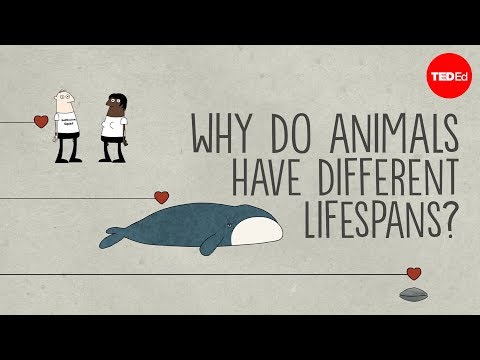
Why do animals have such different lifespans? - Joao Pedro de Magalhaes
View full lesson: http://ed.ted.com/lessons/why-do-animals-have-such-different-lifespans-joao-pedro-de-magalhaes For the microscopic lab worm C. elegans, life equates to just a few short weeks...
==========
For the microscopic lab worm, C. elegans life equates to just a few short weeks on Earth. Compare that with the tortoise, which can age to more than 100 years. Mice and rats reach the end of their lives after just four years, while for the bowhead whale, Earth's longest-lived mammal, death can come after 200. Like most living things, the vast majority of animals gradually degenerate after reaching sexual maturity in the process known as aging. But what does it really mean to age? The drivers behind this process are varied and complicated, but aging is ultimately caused by cell death and dysfunction. When we're young, we constantly regenerate cells in order to replace dead and dying ones. But as we age, this process slows down. In addition...
==========
For the microscopic lab worm, C. elegans life equates to just a few short weeks on Earth. Compare that with the tortoise, which can age to more than 100 years. Mice and rats reach the end of their lives after just four years, while for the bowhead whale, Earth's longest-lived mammal, death can come after 200. Like most living things, the vast majority of animals gradually degenerate after reaching sexual maturity in the process known as aging. But what does it really mean to age? The drivers behind this process are varied and complicated, but aging is ultimately caused by cell death and dysfunction. When we're young, we constantly regenerate cells in order to replace dead and dying ones. But as we age, this process slows down. In addition...